When Every Minute Matters: The Information Systems Behind Urgent Eye Care
Emergency eye care begins before a patient reaches the examination room, with the rapid collection and routing of information that helps determine where, when, and how that person should be evaluated.
Modern eye care has sophisticated instruments, digital records, secure messaging, and imaging tools. During an urgent problem, however, the most valuable technology may be something far simpler: a clear phone connection, a well-designed triage process, and an accurate description of what changed.
A red eye can reflect anything from minor irritation to a serious infection. New floaters may be harmless, but a sudden cluster accompanied by flashes or a shadow can signal a retinal emergency. The challenge is not to diagnose these problems at home. It is to recognize high-risk information and move it to the right professional without avoidable delay.
Urgent Care Is an Information-Routing Problem
Routine online scheduling works well when the need is predictable. An eye emergency is different because timing is part of the clinical question. A person who selects the next available routine slot may unintentionally hide the urgency of a symptom from the care team.
Direct contact allows staff to ask structured questions, alert the eye doctor, and explain whether the person should come to the office, seek emergency medical care, begin immediate first aid, or call 911. The goal of triage is not to reach a final diagnosis by telephone. It is to choose the safest next step based on the information available.
When calling, lead with the symptom rather than a general request to be seen. “I suddenly lost part of the vision in my left eye 20 minutes ago” provides more actionable information than “My eye is bothering me.”
Capture the Details That Change Priority
A strong urgent-care workflow gathers a small set of high-value facts. Patients can speed that process by being ready to explain:
- Whether the problem started suddenly or gradually
- The exact or approximate time it began
- Whether one eye or both eyes are affected
- Whether vision is blurred, missing, distorted, doubled, or unchanged
- Whether there is pain, redness, discharge, swelling, or light sensitivity
- Whether an injury, chemical, tool, plant material, glass, or metal was involved
- Whether the person wears contact lenses
- Whether weakness, confusion, severe headache, dizziness, or speech difficulty is also present
If an exposure involved a product, keep its container or photograph the label only when doing so does not delay first aid. For trauma, note what happened and whether the object struck the eye at high speed. A current medication list, allergy information, and relevant eye history can also help.
Some Vision Changes Need Immediate Escalation
Flashes, Floaters, and a Curtain-Like Shadow
The National Eye Institute identifies a sudden increase in floaters, flashes of light, and a dark curtain or shadow over part of the visual field as warning signs of retinal detachment. It advises going to an eye doctor or emergency room immediately because delayed treatment can increase the risk of permanent vision loss.
A camera cannot photograph what a patient sees inside the visual field, and a normal-looking exterior does not rule out a retinal problem. This is a clear example of technology’s limits: an in-person dilated examination, and sometimes specialized testing, may be necessary.
Severe Pain With Redness and Nausea
Most glaucoma develops without dramatic early symptoms, but acute angle-closure glaucoma is different. The National Eye Institute’s guide to glaucoma types describes sudden intense eye pain, a red eye, blurry vision, and nausea as signs requiring immediate medical attention.
Vision Changes With Neurological Symptoms
Sudden visual trouble can also occur with a stroke. The American Stroke Association’s B.E. F.A.S.T. guidance includes eye or vision changes alongside balance loss, facial drooping, arm weakness, and speech difficulty. If these warning signs are present, call 911 rather than waiting for an office response or trying to drive.
For a Chemical Splash, Rinsing Comes Before Messaging
A chemical exposure is one situation in which documenting the incident should never delay action. Do not pause to complete an online form, search for a video, or take a perfectly framed photograph before rinsing.
Poison Control advises removing contact lenses and immediately irrigating the eye with plenty of room-temperature water for at least 15 to 20 minutes. After rinsing has begun, call Poison Control at 1-800-222-1222 for product-specific guidance and seek urgent evaluation as directed. Severe symptoms require emergency care after irrigation.
If another person is present, that person can call while rinsing continues. Bring the product container or a clear image of its label when it is safe to do so.
Foreign Objects Require Restraint, Not Experimentation
The instinct to rub an irritated eye or remove a visible particle with a household tool can make an injury worse. The correct response depends on whether the material is a loose surface particle or something embedded or propelled at high speed.
MedlinePlus guidance on foreign objects in the eye warns against rubbing and advises immediate emergency evaluation after exposure to metal fragments from activities such as hammering or grinding. Do not attempt to remove embedded glass, metal, or another object, and do not apply pressure to an injured eye.
A description of the mechanism often matters more than a phone image. “Metal fragment while grinding” communicates a different risk from “loose eyelash after applying makeup.”
Contact-Lens Symptoms Deserve Their Own Triage Path
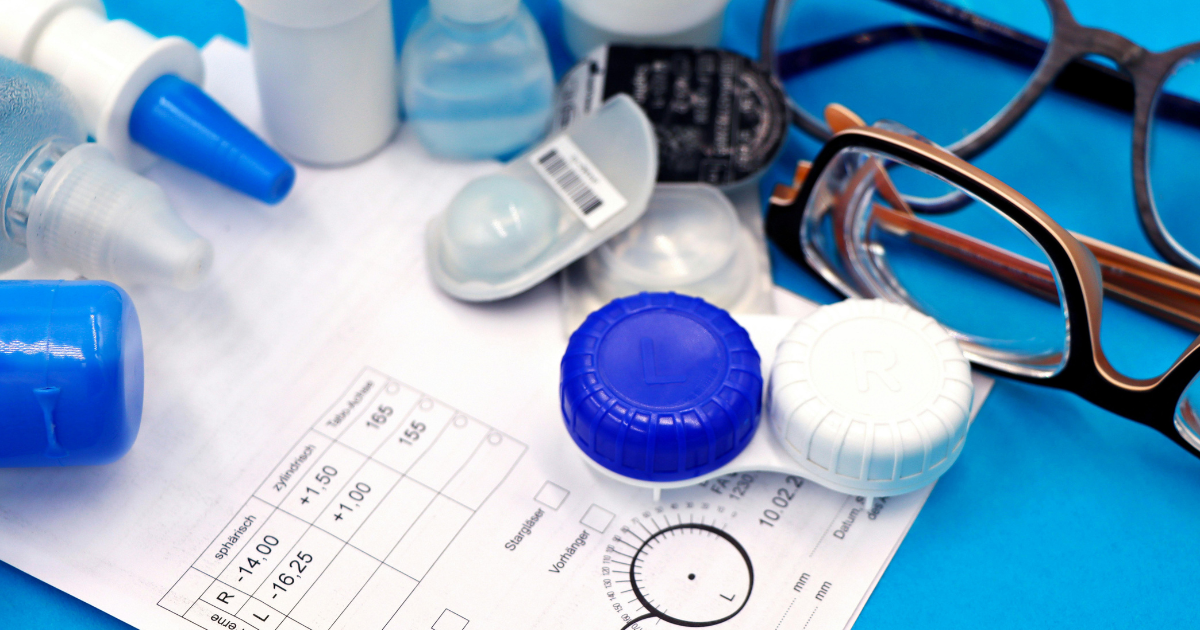
Contact lenses sit directly on the cornea, so pain or redness in a lens wearer should not automatically be treated as ordinary dryness. The Centers for Disease Control and Prevention lists worsening pain, redness, light sensitivity, sudden blur, unusual tearing, and discharge among symptoms associated with microbial keratitis.
If unusual irritation develops, remove the lenses promptly, do not put them back in, and contact an eye-care professional. Tell the office about overnight wear, swimming, water exposure, solution use, replacement habits, and when the current pair was opened. Do not mask significant symptoms with leftover prescription drops unless a clinician specifically directs you to use them.
Photos and Telehealth Can Support Triage, Not Replace an Examination
A clear image may help document eyelid swelling, visible discharge, bruising, or the label of an involved chemical. Video can show how symptoms are changing. These tools can improve communication, but they cannot reliably measure eye pressure, test vision under controlled conditions, stain the cornea, or examine the retina.
Use the communication channel requested by the practice rather than sending medical images through social media. The U.S. Department of Health and Human Services recommends privacy precautions for telehealth, including secure connections, strong passwords, updated devices, and avoiding public networks when sharing health information.
Most importantly, do not wait for a digital reply when the office has instructed patients to call or when symptoms may require emergency services.
Businesses Need an Eye-Injury Response System
Workplaces that involve chemicals, dust, tools, projectiles, or machinery should treat eye safety as an operational system rather than a box of unused goggles. Controls should include hazard-specific protective equipment, accessible first-aid resources, staff training, incident reporting, and a clear escalation route.
The Occupational Safety and Health Administration’s eye and face protection resources explain employer responsibilities and protection standards for relevant hazards. Digital training logs and automated inspection reminders can improve consistency, but employees must still know where protection and eyewash equipment are located and what to do in the first seconds after an incident.
Local Urgent Eye Care in New Hartford
Gateway Eye Care provides care in New Hartford, New York, for urgent concerns that include eye pain or infection, sudden vision loss or change, chemical exposure causing pain or visual problems, foreign objects such as glass or metal, and the sudden appearance of flashes or floaters.
The practice instructs patients with an eye emergency to contact the office immediately for guidance. It also advises people with severe trauma or sudden vision loss to seek urgent medical care right away and to avoid rubbing or placing pressure on the eye.
This distinction is important. An optometry practice can evaluate many urgent eye conditions and determine appropriate care, but some symptoms require an emergency department, emergency medical services, or referral for specialized treatment.
Create a Personal Eye-Emergency Protocol
- Save your eye-care provider’s phone number in your contacts.
- Keep current glasses available if you normally wear contact lenses.
- Store medication, allergy, and eye-surgery information where it can be accessed quickly.
- Keep the Poison Control number, 1-800-222-1222, in your phone.
- Use suitable eye protection for work, sports, repairs, and yard projects.
- Learn the visual and neurological warning signs that require a 911 call.
- During an incident, record the onset time and describe the symptom clearly.
The strongest urgent-care system is not the one with the most apps. It is the one that moves accurate information to the right professional quickly, protects privacy without creating delay, and makes the next action unmistakably clear. When vision changes suddenly, good communication is not administrative overhead. It is part of the care.