Eye Care in Sealy, TX: When Standard Lenses Are Not Enough
Eye care in Sealy, TX can involve more than updating a glasses prescription when vision remains distorted or contact lenses are difficult to wear. For…

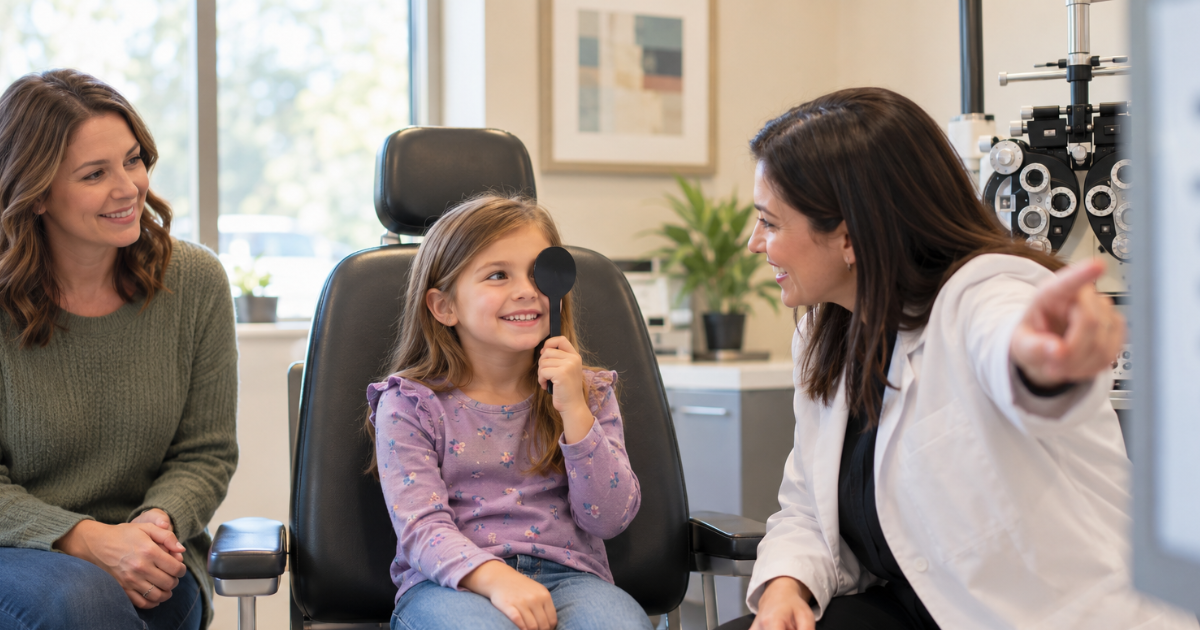
Professional pediatric eye care in Robertsdale, AL can help families understand how well a child sees, how effectively the eyes work together, and whether vision is developing as expected. These evaluations matter because children rely on vision for reading, writing, sports, coordination, and many ordinary classroom activities.
A child may not realize that the world looks blurry or that one eye sees differently from the other. Younger children also may not have the vocabulary to explain headaches, eye strain, double vision, or difficulty focusing. This makes age-appropriate testing and professional observation important parts of preventive care.
Visual acuity describes how clearly someone can see at a particular distance, but it represents only one element of functional vision. A child may read a line of letters successfully while still experiencing trouble with eye alignment, depth perception, focusing, or coordination between the eyes.
A pediatric eye exam can evaluate several areas, including:
Testing methods can be adapted to the child’s age and communication level. Children do not always need to know the alphabet or respond like adults for an eye care professional to gather useful information.
Modern pediatric eye care combines professional observation with tools selected for a child’s developmental stage. Instead of depending on a traditional letter chart alone, providers may use shapes, matching cards, lights, pictures, movement, or objective measurements.
The American Association for Pediatric Ophthalmology and Strabismus explains that children’s vision can be checked in different ways according to age and ability. Very young children may be evaluated by observing how they focus on objects, respond when one eye is covered, or track movement. Older children may identify shapes or letters one eye at a time.
This flexible approach helps reduce pressure on children. The exam becomes a series of manageable activities rather than a test they can pass or fail. It also allows the doctor to compare responses between the eyes and look for patterns that may require further evaluation.
Adults can compare current vision with years of previous experience. Children may assume that everyone sees the way they do. If the board looks blurry, words become uncomfortable after several minutes, or one eye provides most of the visual input, a child may simply adapt.
Adaptation can look like a behavioral, academic, or attention-related issue. A child may avoid reading, lose their place, sit unusually close to screens, or become frustrated during visually demanding tasks. These behaviors do not automatically indicate an eye condition, but they are worth discussing with an optometrist.
Signs that may justify an eye care appointment include:
Some vision problems produce no obvious signs, which is why observation alone cannot replace appropriate vision care.
School and pediatric-office screenings provide valuable opportunities to identify children who may need additional evaluation. They are efficient tools for checking large numbers of children and can detect certain signs of reduced vision or eye misalignment.
A screening, however, is not the same as a comprehensive eye examination. Screenings typically focus on selected measurements and are designed to indicate whether a child should be referred. A comprehensive exam provides a more detailed assessment of visual function and eye health.
A child who passes a screening could still experience concerns that were not included in the screening process. Likewise, a referral does not automatically mean that a serious condition is present. It means more information is needed.
Parents should keep a copy of screening results and share them with the eye doctor, especially when the child has symptoms, a family history of eye conditions, or difficulty with schoolwork.
Childhood is a period when the eyes and brain are learning to work together. If one eye provides a clearer image than the other, the brain may begin relying more heavily on the stronger eye. Over time, this can interfere with normal visual development.
Amblyopia, commonly called lazy eye, is one condition associated with disrupted communication between the brain and an eye. The National Eye Institute reports that amblyopia is the most common cause of vision loss in children and may be difficult for parents to notice. It can result from unequal refractive errors, eye misalignment, or another condition that interferes with clear vision.
Early diagnosis is valuable because treatment during childhood can help strengthen the connection between the brain and the weaker eye. Depending on the cause and a doctor’s evaluation, care may involve prescription lenses, patching, eye drops, monitoring, or referral for additional treatment.
Parents should not attempt to diagnose or treat suspected amblyopia at home. Similar-looking symptoms can have different causes, and the appropriate plan depends on examination findings.
Vision does not determine intelligence, motivation, or academic ability. However, an uncorrected visual problem can make certain learning tasks unnecessarily difficult.
Students frequently shift their focus between a nearby worksheet, a computer screen, and a distant classroom display. They also use eye movements to follow lines of text, alignment to maintain a single image, and depth perception for many hands-on activities.
When these tasks require excessive effort, a child may tire quickly or avoid the activity. Identifying a correctable vision issue can remove one potential barrier and help parents and educators better understand the child’s needs.
An eye examination cannot diagnose every cause of reading or learning difficulty. It can determine whether vision or eye health may be contributing and whether correction, monitoring, or further evaluation is appropriate.
Tablets, laptops, phones, and classroom displays are now part of many children’s daily routines. Digital devices do not automatically cause an eye disorder, but extended near work may contribute to temporary discomfort, dryness, headaches, or focusing fatigue.
Families can encourage healthier screen habits by:
Persistent discomfort, blurred vision, double vision, or recurring headaches should be discussed with an eye care professional rather than attributed automatically to screen time.
A calm explanation can make the appointment more comfortable. Parents can tell children that the doctor will ask them to look at pictures, lights, or letters and that there are no wrong answers. Avoid describing the visit as frightening or promising that every part will feel a particular way.
Bring relevant information, including:
Robertsdale Eye Care uses a gentle, child-friendly approach and encourages parents to remain nearby during the examination. Explaining each step in simple language can help children become active participants rather than passive or anxious patients.
Robertsdale Eye Care recommends a first comprehensive eye examination around age one, another near age three, an exam before starting school, and annual visits afterward. A doctor may recommend a different schedule based on findings, symptoms, family history, premature birth, developmental considerations, or an existing prescription.
An appointment should also be considered when a parent, teacher, pediatrician, or school screening identifies a concern. Sudden vision loss, significant eye pain, chemical exposure, trauma, or a foreign object in the eye requires prompt professional attention rather than waiting for a routine visit.
Diagnostic tools can provide valuable measurements, but pediatric care also depends on patience, communication, and careful observation. A child who feels comfortable is more likely to engage with the process and provide consistent responses.
Robertsdale Eye Care evaluates visual acuity, eye alignment, depth perception, visual development, and overall eye health for children in Robertsdale and surrounding Baldwin County communities. By combining age-appropriate testing with a calm approach, the practice helps families obtain useful information about their children’s vision.
Children use their eyes to explore, learn, play, and build confidence. Regular pediatric eye care gives parents an opportunity to identify potential concerns early and support clearer, more comfortable vision throughout important developmental years.
This article provides general educational information and does not replace an examination, diagnosis, or treatment plan from a qualified eye care professional.