Eye Care in Sealy, TX: When Standard Lenses Are Not Enough
Eye care in Sealy, TX can involve more than updating a glasses prescription when vision remains distorted or contact lenses are difficult to wear. For…

Changes in vision are sometimes blamed on an outdated prescription, poor lighting, or normal aging. However, gradually increasing blur and glare may indicate a cataract. Professional cataract care in Vienna, VA can identify these changes, monitor their progression, and help patients determine when a surgical consultation may be appropriate. Vienna Eyecare Center provides ongoing evaluation and coordinates care with respected cataract surgeons in the region when surgery becomes necessary.
Modern diagnostic technology has made cataract evaluation more precise, but the process still depends on understanding how vision changes affect the individual patient. A cataract may be visible during an examination long before it significantly interferes with daily life. The decision to pursue surgery is therefore based on more than the presence of lens clouding alone.
The natural lens sits behind the colored iris and helps focus light onto the retina. In a healthy eye, the lens is clear. A cataract forms when part of that lens becomes cloudy, preventing light from passing through as cleanly as it once did.
The National Eye Institute explains that cataracts commonly develop because of natural changes within the lens as people age. They may occur in one or both eyes, but a cataract cannot spread from one eye to the other.
Cataracts often develop slowly. Because the brain adapts to gradual changes, a patient may not immediately realize how much visual clarity or color perception has declined.
Early cataracts may produce few noticeable symptoms. As clouding progresses, patients may experience:
These symptoms can also occur with other eye conditions. An examination is necessary to determine whether a cataract is responsible or whether another part of the visual system requires attention.
Cataract evaluation begins with a comprehensive eye examination. The eye doctor reviews symptoms, health history, medication use, and changes in daily visual performance. Several examination methods may then be used to evaluate the eyes.
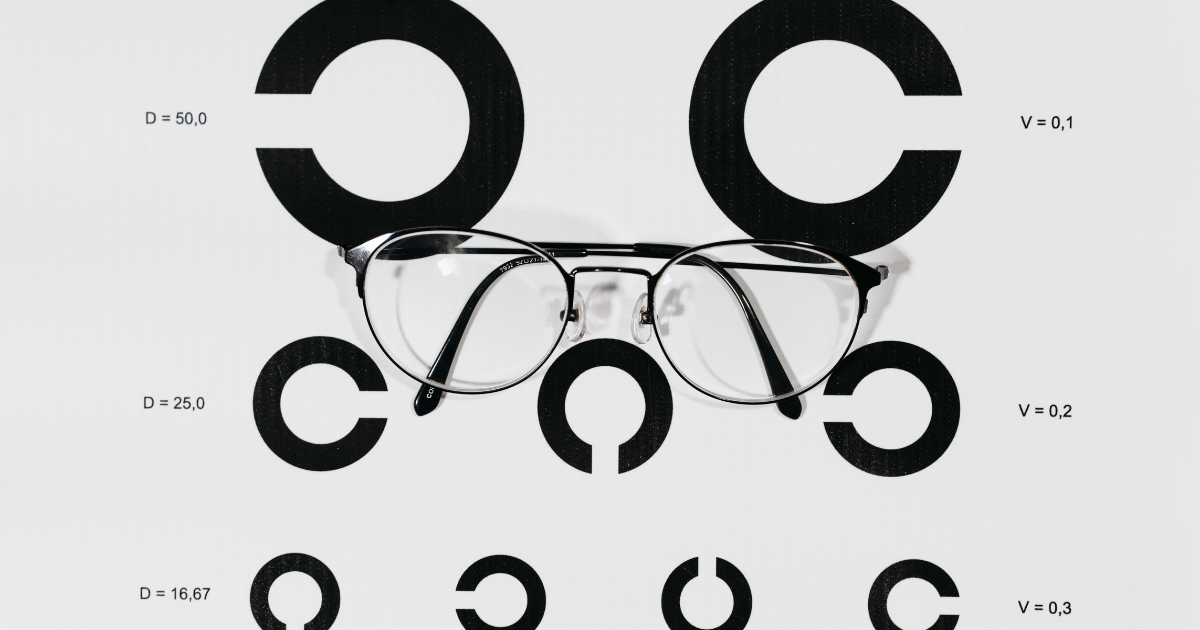
A visual acuity test measures how clearly a patient can identify letters or symbols at a standardized distance. Comparing current results with previous examinations helps reveal whether vision has changed over time.
However, visual acuity is only one measurement. A person may read relatively well on a high-contrast eye chart while still struggling with glare, nighttime driving, or low-contrast objects.
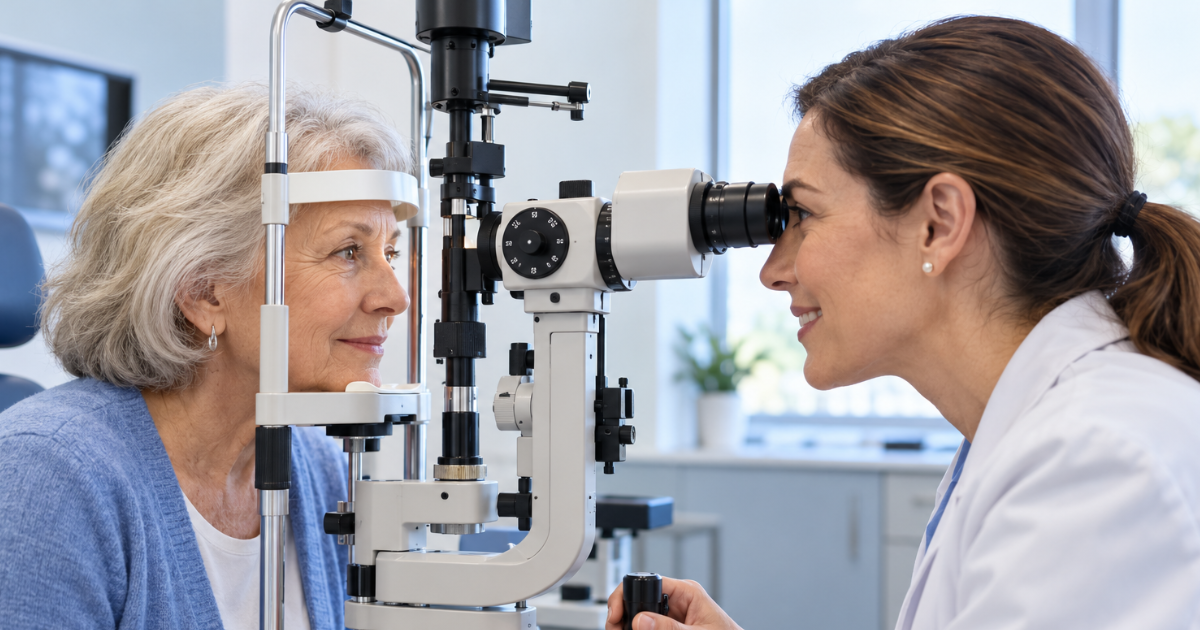
A slit lamp combines magnification with a narrow beam of light, allowing the doctor to examine structures at the front of the eye. The lens can be viewed for clouding, and the location and density of a cataract can be documented.
Dilating drops enlarge the pupil so the doctor can examine the lens and structures at the back of the eye. This is important because reduced vision may involve the retina, optic nerve, or another condition in addition to a cataract.
Depending on the patient’s symptoms and health, additional diagnostic technology may be used to evaluate the cornea, retina, optic nerve, eye pressure, and other visual structures. These findings help establish whether a cataract is the primary cause of the vision change and whether other conditions could affect treatment planning.
A cataract does not automatically require immediate surgery. During its early stages, vision may remain functional with a revised eyeglass prescription, improved lighting, anti-glare lenses, or other practical adjustments.
Regular examinations allow the eye doctor to compare findings and determine how quickly the cataract is changing. Monitoring also gives patients an opportunity to discuss challenges that may not appear on a standard vision chart.
Useful details to report include:
Vienna Eyecare Center monitors cataract progression and helps patients evaluate when the effects on daily life justify a surgical consultation.
There is no universal visual-acuity number that determines the perfect time for surgery. The American Academy of Ophthalmology advises considering treatment when cataracts prevent someone from doing activities they want or need to perform.
A person who drives frequently at night may consider surgery earlier than someone whose cataract has little effect on daily tasks. Work responsibilities, hobbies, independence, general health, and the condition of the other eye can all influence the decision.
Patients should not feel pressured to proceed simply because a cataract has been diagnosed. Instead, they should understand:
Cataract surgery is the only treatment that removes the cloudy natural lens. During the procedure, an ophthalmologist removes the affected lens and replaces it with a clear artificial intraocular lens, commonly called an IOL.
According to the American Academy of Ophthalmology, the IOL remains inside the eye and helps focus incoming light. The procedure is generally performed on one eye at a time.
Modern surgical planning uses detailed measurements of the eye to calculate the focusing power of the artificial lens. Technology can measure factors such as eye length and corneal curvature, but lens selection still requires a conversation about the patient’s visual priorities.
IOLs are available in different designs. The appropriate choice depends on eye health, lifestyle, prescription, visual goals, and the surgeon’s recommendations.
A monofocal IOL usually provides one primary focusing distance. Many patients choose distance correction and use reading glasses for close work, although other focusing targets may be considered.
A toric IOL is designed to correct certain degrees of corneal astigmatism. Precise measurements are necessary to determine whether this option is appropriate and how the lens should be positioned.
Some IOLs are designed to provide a broader range of vision and reduce dependence on glasses for certain activities. These lenses involve tradeoffs and may not be appropriate for every eye. Patients should discuss potential benefits, limitations, night-vision effects, and realistic expectations with the cataract surgeon.
Cataract treatment often involves collaboration between an optometrist and an ophthalmic surgeon. Vienna Eyecare Center works with cataract surgeons in the region to help create a coordinated experience.
The optometrist may identify and monitor the cataract, document functional changes, discuss the referral process, and share relevant examination findings. The surgeon performs the surgical evaluation, confirms candidacy, reviews lens options, obtains informed consent, and completes the procedure.
Postoperative visits monitor healing, visual improvement, eye pressure, and possible complications. The patient should follow the prescribed eye-drop schedule and activity restrictions carefully. Sudden vision loss, increasing pain, flashes, numerous new floaters, significant redness, or worsening symptoms require prompt professional attention.
Not every cataract can be prevented because aging and genetics play major roles. However, several habits may support overall eye health and reduce avoidable risks:
Eye examinations remain important even when vision seems stable. Cataracts and other age-related conditions may begin before symptoms become obvious.
Vienna Eyecare Center has provided family eye care in Vienna and surrounding Fairfax County communities since 1984. Its cataract services focus on diagnosis, monitoring, practical vision support, and coordinated referrals when surgery becomes the appropriate next step.
Technological advances have improved the ability to examine the lens, measure the eye, and plan treatment. Yet the most important question remains personal: Is the cataract interfering with the patient’s ability to live safely and comfortably?
A comprehensive eye examination can help answer that question and distinguish cataracts from other potential causes of visual change. With regular monitoring and coordinated care, patients can approach the treatment decision with clearer expectations and greater confidence.
This article is for general educational purposes and does not replace an eye examination, diagnosis, or individualized medical advice. Contact an eye care professional promptly for sudden vision changes, eye pain, flashes of light, a rapid increase in floaters, or other urgent symptoms.