Scleral Lenses in Sealy, TX: Advanced Vision Technology
Scleral lenses in Sealy, TX offer a specialized vision-correction option for patients whose eyes cannot be adequately served by ordinary soft contacts or eyeglasses. Their…

Scleral lenses in Sealy, TX offer a specialized vision-correction option for patients whose eyes cannot be adequately served by ordinary soft contacts or eyeglasses. Their large-diameter design, fluid reservoir, and customized fit can provide more stable vision for keratoconus, irregular corneas, severe astigmatism, and selected cases of ocular-surface disease.
These lenses demonstrate how modern eye care combines advanced materials, detailed measurements, and personalized clinical fitting. Rather than resting directly on the cornea like a conventional contact lens, a scleral lens vaults over it and lands on the sclera—the white portion of the eye.
A scleral lens is a rigid gas-permeable contact lens with a diameter large enough to extend beyond the cornea. Before application, its bowl is filled with sterile, preservative-free solution. This creates a fluid reservoir between the back of the lens and the corneal surface.
The design serves two main purposes:
For a patient with an irregular corneal shape, glasses may not fully correct the distorted way light enters the eye. A properly fitted scleral lens can mask some of that irregularity by providing a more uniform refractive surface.
The lens also tends to remain stable because it rests on a broader area of the eye. This stability can be especially useful when smaller lenses rotate, decenter, or provide inconsistent vision.
Scleral lenses are not selected only by prescription strength. Their fit must account for the shape of the cornea, the height of the lens over the corneal surface, and the way the edge aligns with the sclera.
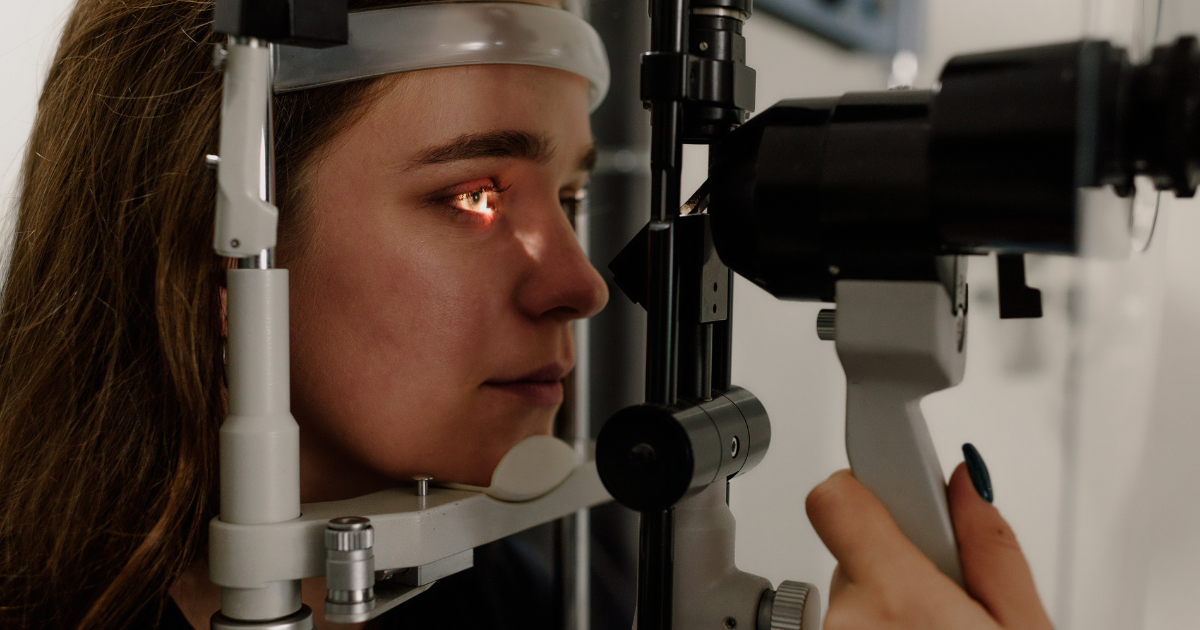
A specialty contact lens evaluation may include:
Digital corneal imaging helps the provider understand elevation differences that may not be visible during a standard examination. Diagnostic lenses then provide real-world information about how the eye responds to a particular diameter, curvature, and landing profile.
Keratoconus causes the cornea to become progressively thinner and more cone-shaped. This irregularity can create distorted or fluctuating vision that is difficult to correct with glasses.
A scleral lens does not reshape or cure keratoconus. Instead, it vaults over the irregular cornea while the fluid beneath the lens helps form a smoother optical system. This may improve functional vision when glasses or conventional contacts are insufficient.
The American Academy of Ophthalmology’s clinical overview of scleral lens applications discusses their use for irregular corneas and ocular-surface disease. Patients with keratoconus may also need separate monitoring to determine whether the condition is progressing.
Regular astigmatism can often be corrected with eyeglasses, soft toric lenses, or traditional gas-permeable contacts. Irregular astigmatism is more complex because the corneal curvature is not uniform.
Since a scleral lens creates a new optical surface over the cornea, it may reduce visual distortion associated with irregular astigmatism. Its larger diameter can also provide stable positioning and reduce the rotation that sometimes affects smaller toric lenses.
Not every patient with astigmatism requires a scleral lens. The recommendation depends on corneal shape, prescription, previous lens experience, comfort, and achievable vision with simpler options.
Corneal shape may change after surgery, trauma, transplantation, or scarring. In some cases, these changes make conventional contact lenses difficult to fit or unable to provide stable correction.
Scleral technology allows the lens to vault over the most irregular portion of the cornea. The landing area can then be adjusted independently to support comfort and stability.
Patients who have undergone eye surgery require careful evaluation. The provider must consider the surgical history, corneal health, graft condition when applicable, and whether contact lens wear is medically appropriate.
The fluid reservoir beneath a scleral lens continuously covers the corneal surface during wear. This can offer therapeutic benefits for selected patients with severe dry eye or ocular-surface disease.
However, scleral lenses are not a universal dry eye treatment. The source of the symptoms must still be evaluated. Eyelid inflammation, meibomian gland dysfunction, medication effects, autoimmune disease, allergies, or poor blinking may require additional management.
Some patients also experience midday fogging, deposits, redness, or reduced wearing time. These concerns may be related to lens fit, tear exchange, inflammation, solution choice, or lens-surface wettability. Follow-up visits allow the provider to investigate and adjust the treatment plan.
A scleral lens fitting often takes more than one appointment because the lens is customized and the eye must be evaluated after real wearing time.
The provider reviews the patient’s diagnosis, symptoms, previous contact lens experience, daily routine, and treatment goals. Corneal measurements and ocular-surface findings help determine whether scleral lenses are appropriate.
A trial lens is filled with sterile solution and placed on the eye. After the lens settles, the provider evaluates clearance over the cornea, alignment over the sclera, comfort, and vision.
Measurements from the diagnostic evaluation guide the custom lens design. The prescription, diameter, curvature, landing profile, and other parameters may be adjusted.
When the lenses arrive, the provider verifies fit and vision. The patient learns how to apply, remove, clean, disinfect, fill, and store them.
Follow-up appointments help identify pressure areas, inadequate clearance, bubbles, fogging, deposits, or vision changes. One or more design modifications may be necessary before the final fit is achieved.
Scleral lenses must be filled completely before insertion and applied without trapping an air bubble beneath the lens. Many wearers look straight down toward a mirror while holding the eyelids open and bringing the filled lens upward to the eye.
Some patients use a plunger, application stand, or another approved aid. Training is important because bubbles can reduce vision and create localized discomfort.
Removal typically involves using a small suction tool near the lower edge of the lens to break the seal. The tool should not be placed directly over the center and used to pull against the eye without first releasing the lens edge.
Scleral lenses require different products for cleaning, disinfecting, storing, rinsing, and filling. These products are not automatically interchangeable.
The Scleral Lens Education Society care guide emphasizes several important practices:
Non-neutralized hydrogen peroxide can cause severe irritation. Patients should follow the exact system and schedule recommended for their lenses, particularly when a specialty surface coating is present.
Scleral lens wear should not cause significant pain or persistent redness. Remove the lens and contact the eye-care provider when experiencing:
Contact lens-related infections can progress quickly. Patients should not continue wearing a lens to “see if it gets better” when significant symptoms develop.
A specialty lens evaluation may be worthwhile for patients who:
Candidacy depends on eye health, manual dexterity, ability to follow hygiene instructions, lifestyle, and commitment to follow-up care.
Pupila Family Eye & Ear Care provides eye care and optical services through multiple Texas locations. Its Sealy office is located at 1614 Highway 36 in Sealy, Texas 77474.
The practice offers specialty contact lens services and evaluates options for patients with keratoconus, dry eye, irregular corneas, and other complex vision needs. Because scleral lenses require individualized measurements and follow-up, patients should confirm fitting availability and appointment requirements when scheduling with the Sealy office.
Scleral lenses combine advanced optical design with a highly personalized clinical process. Their value comes from more than their size: the carefully controlled vault, fluid reservoir, stable landing zone, and customized prescription work together to create a new visual surface.
Successful wear also depends on patient training, correct solutions, consistent hygiene, and scheduled follow-up. For people who have struggled with conventional vision correction, a professional scleral lens evaluation can determine whether this technology offers a practical path toward clearer and more comfortable vision.