Professional pediatric foot care in Statesboro, GA can help families evaluate persistent pain, unusual walking patterns, sports injuries, skin or nail problems, and other concerns that may affect a child’s comfort and mobility.
Children’s feet change rapidly. Bones continue developing, muscles strengthen, balance improves, and walking patterns often evolve naturally with age. That growth can make it difficult for parents to distinguish a harmless developmental variation from a concern that deserves professional evaluation.
Modern pediatric podiatry combines careful observation, physical examination, medical history, footwear assessment, and diagnostic technology when clinically appropriate. The goal is not to label every difference as a disorder. It is to understand whether the child is comfortable, functioning well, and developing as expected.
Children’s Feet Are Not Small Adult Feet
A child’s feet contain developing bones, flexible joints, growth plates, and soft tissues that continue changing through adolescence. Features that would appear unusual in an adult may be normal during early childhood.
Flat feet are a good example. Many young children appear to have little or no visible arch when standing. The American Academy of Pediatrics explains that children’s flexible joints and the fat pad along the inner foot can make the feet look flat. Arches commonly become more noticeable as children grow.
Painless, flexible flat feet generally do not require automatic treatment. Evaluation becomes more important when flat feet are associated with pain, stiffness, pressure sores, limited motion, fatigue, or difficulty participating in ordinary activities.
Observation Is an Important Diagnostic Tool
A pediatric foot evaluation often begins before any imaging or specialized equipment is used. Watching a child stand, walk, turn, run, or rise onto the toes can provide meaningful information about alignment, balance, symmetry, and movement.
The podiatrist may observe:
- Whether both feet move similarly
- How the heels and arches respond during standing
- Whether the toes point inward or outward
- How weight transfers from heel to forefoot
- Whether the child limps or avoids one side
- How footwear wears along the soles
- Whether movement produces pain or fatigue
Technology can support this process, but it does not replace clinical judgment. A slow-motion video, digital image, or measurement is useful only when interpreted alongside the child’s symptoms, age, activity level, and physical examination.
Parents Can Capture Useful Information at Home
Children do not always reproduce a symptom during a short medical appointment. A child who limps after soccer practice may walk normally after resting in the waiting room.
A brief phone video can help document intermittent concerns. Record the child naturally rather than repeatedly asking for exaggerated movements. Useful examples may include walking from the front, back, and side or showing when a symptom occurs during a familiar activity.
Parents can also maintain simple notes describing:
- When the problem began
- Whether it followed an injury or activity change
- Where the child reports pain
- What time of day symptoms are most noticeable
- Whether rest, footwear, or a particular activity changes the symptoms
- Any swelling, redness, bruising, skin changes, or fever
- Previous treatment and its effect
Home observations support the examination, but photographs and videos cannot establish a diagnosis by themselves.
When a Walking Pattern Deserves Attention
Intoeing, out-toeing, occasional toe walking, and flexible flat feet may occur during normal development. Many variations improve as a child grows.
However, families should seek medical guidance when a walking difference is painful, one-sided, worsening, or interfering with play. The American Academy of Pediatrics’ guidance for active toddlers recommends evaluation when a child has an unexplained limp, persistent difficulty walking, or toe walking that continues beyond the expected early stage.
Other reasons to schedule an assessment include:
- Frequent tripping beyond what seems typical for the child
- Refusal to bear weight on one foot
- Persistent heel, arch, ankle, or leg pain
- Stiffness or limited foot and ankle movement
- Uneven shoe wear combined with symptoms
- A noticeable change from the child’s usual gait
- Reduced participation in sports or playground activities
A sudden inability to walk, obvious deformity, severe pain, significant swelling, an open injury, or symptoms following major trauma may require urgent medical evaluation.
Digital X-Rays Should Answer a Clinical Question
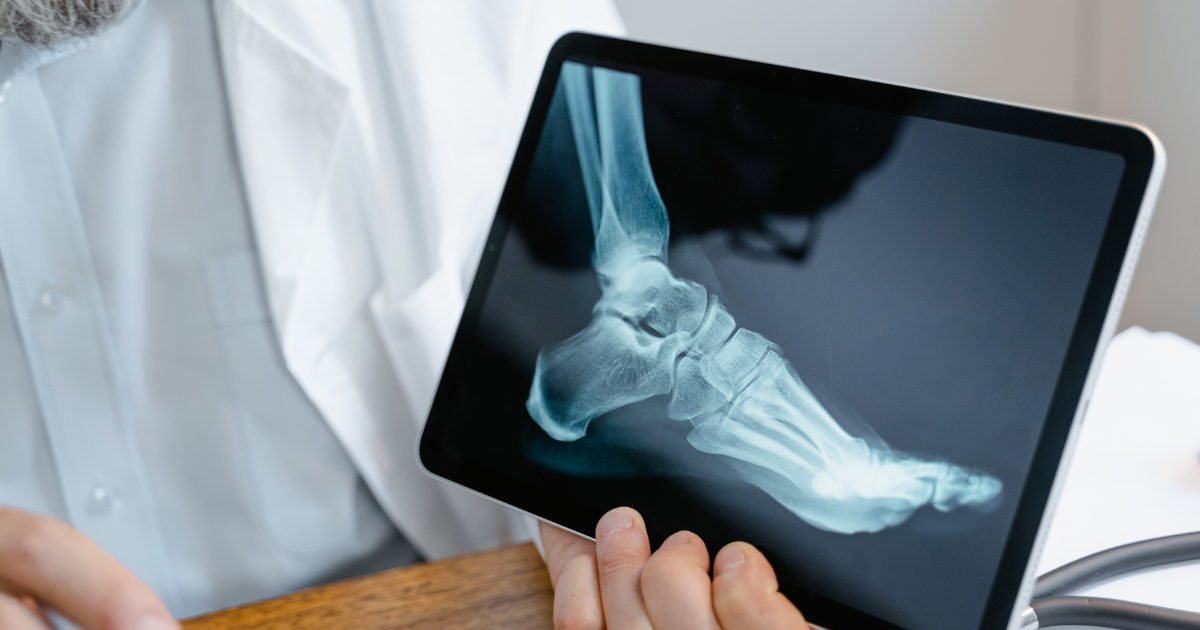
Most pediatric foot concerns do not automatically require imaging. The podiatrist first uses the history and examination to determine whether an X-ray could clarify a suspected fracture, alignment problem, bone abnormality, or other condition.
Digital X-ray systems can make images available quickly for clinical review and allow the provider to explain visible structures to the parent and child.
Children require particular attention to radiation exposure. The U.S. Food and Drug Administration’s pediatric X-ray guidance recommends using imaging only when it is needed to answer a clinical question and adjusting the technique to the child’s size and the body area being examined.
Parents may ask:
- Why is the X-ray recommended?
- How could the result change the treatment plan?
- Is another type of evaluation appropriate?
- Are pediatric imaging settings being used?
- Should previous imaging records be provided?
A necessary X-ray can offer important diagnostic value. The objective is appropriate imaging—not avoiding useful technology or using it without a clear reason.
Footwear Is Part of the Evaluation
Children’s feet can grow before a parent realizes their shoes have become too small. Tight toe boxes, worn-out soles, poor traction, or shoes that do not suit the activity may contribute to discomfort.
Bring the shoes your child wears most frequently to the appointment, including school shoes, athletic footwear, cleats, or dance shoes when relevant. Patterns of wear may help the podiatrist understand how the child moves.
The American Academy of Pediatrics recommends comfortable toddler shoes with nonskid soles and advises families to check fit regularly. Appropriate shoes should generally:
- Provide enough room for the toes
- Remain secure without excessive tightness
- Bend where the foot naturally bends
- Suit the child’s activity and playing surface
- Be replaced when damaged or outgrown
Buying a much larger shoe to allow for growth may create slipping or instability. Fit should be reassessed rather than estimated solely from the size printed inside the shoe.
Orthotics Are Tools, Not Universal Solutions
Orthotic devices may redistribute pressure, support alignment, or improve comfort for selected children. They are not automatically required for every low arch or inward-pointing foot.
The decision should be based on symptoms, examination findings, flexibility, gait, footwear, and the child’s functional needs. Some concerns may be managed through observation, stretching, activity modification, shoe changes, or other conservative strategies.
When orthotics are recommended, parents should understand:
- The specific problem the device is intended to address
- Whether it is prefabricated or customized
- How gradually the child should begin wearing it
- Which shoes can accommodate it
- How growth will affect fit
- When the child should return for reassessment
A growing child may need follow-up because both the feet and activity demands change over time.
Sports Injuries Need More Than a Pain Score
Young athletes may underreport pain because they do not want to miss a game. Others may have difficulty explaining whether discomfort feels sharp, sore, unstable, or burning.
A sports evaluation considers the location of pain, how the injury occurred, the child’s sport, training volume, playing surface, footwear, and ability to walk or bear weight.
Continuing to play through an untreated injury may delay recovery. The Centers for Disease Control and Prevention provides youth-sports safety information emphasizing injury recognition, appropriate equipment, and safe participation.
Return-to-sport decisions should be individualized. Feeling better at rest does not always mean the foot or ankle is ready for sprinting, cutting, jumping, or repeated impact.
Ingrown Toenails and Skin Problems Can Affect Activity
An ingrown toenail may cause redness, swelling, and pain along the nail edge. Tight shoes, trauma, and improper trimming can contribute.
MedlinePlus, a service of the National Library of Medicine, recommends trimming toenails straight across rather than rounding the corners or cutting them excessively short.
Do not repeatedly dig beneath a painful nail or attempt to cut deeply into the corner. Schedule professional care if symptoms worsen, recur, or include drainage, spreading redness, severe pain, or fever.
Podiatrists also evaluate corns, calluses, and plantar warts. These conditions may look similar to families but have different causes. A clinical examination can help distinguish pressure-related thickened skin from a viral wart or another growth.
Technology Works Best With Education
The most useful clinical technology does more than generate an image or measurement. It helps the provider explain what was found, compare changes over time, and develop a plan families can follow.
A pediatric podiatry visit may include:
- A discussion of the parent’s and child’s concerns
- Review of medical, developmental, and injury history
- Examination of the skin, nails, muscles, joints, and circulation
- Observation of standing and walking
- Assessment of shoes and activity demands
- Imaging or other testing when clinically indicated
- Explanation of treatment choices and follow-up
Parents should leave knowing what the clinician observed, whether treatment is necessary, which changes to monitor, and when to return.
Pediatric Foot Care at Affinity Foot and Ankle Specialists
Affinity Foot and Ankle Specialists provides pediatric podiatry services at 110 Hill Pond Lane in Statesboro, Georgia.
The practice evaluates children’s foot development, gait concerns, flat feet, intoeing, skin and nail conditions, foot pain, and sports-related injuries. Appointments begin with a discussion of the family’s concerns followed by an examination that may assess skin integrity, calluses, corns, infection, movement, alignment, and footwear.
When indicated by the evaluation, treatment options may include education, exercises, stretching, footwear recommendations, orthotics, additional diagnostic testing, or other individualized care. The practice also offers digital X-ray imaging and broader foot and ankle services.
Dr. Kristian Jeffress is a board-certified podiatrist whose approach combines medical evaluation, patient education, and treatment planning based on the individual patient’s needs and lifestyle.
Early Evaluation Should Provide Clarity
Not every unusual-looking foot or walking pattern requires treatment. Children develop at different rates, and many flexible, painless variations improve naturally.
An evaluation becomes valuable when symptoms persist, movement changes, pain limits activity, or parents remain concerned. Modern tools can add useful information, but the foundation remains a thoughtful history, hands-on examination, and careful observation of the child’s function.
This article is educational and is not a substitute for an examination or individualized medical advice. Contact a pediatrician, podiatrist, or other qualified healthcare professional for concerns about a child’s feet, gait, development, or injuries.