Pediatric Eye Exams in McKinney, TX
Pediatric eye exams in McKinney, TX can use age-appropriate testing and modern diagnostic tools to evaluate a child’s vision even when that child is too…

Pediatric eye exams in McKinney, TX can use age-appropriate testing and modern diagnostic tools to evaluate a child’s vision even when that child is too young to read an eye chart or explain what appears blurry.
Children experience vision differently from adults. A child may assume everyone sees the same way they do, making it unlikely that they will clearly report a problem. Some children compensate by sitting closer to screens, avoiding detailed tasks, covering one eye, or relying more heavily on memory and context.
This is why pediatric eye care requires more than placing smaller letters on a standard chart. Optometrists can combine observation, child-friendly activities, objective measurements, and professional judgment to learn how a child’s eyes focus, move, and work together.
Adults can usually describe blur, glare, double vision, or visual fatigue. Young children may lack the vocabulary and experience needed to explain these symptoms. If one eye sees clearly and the other does not, the stronger eye may compensate enough that the problem remains unnoticed during everyday activities.
Parents and teachers may observe behaviors that could indicate a visual concern, including:
These behaviors do not automatically prove that a child has a vision disorder. They do provide useful information that parents can share with an optometrist. A professional examination is needed to determine whether vision is involved and what next step may be appropriate.
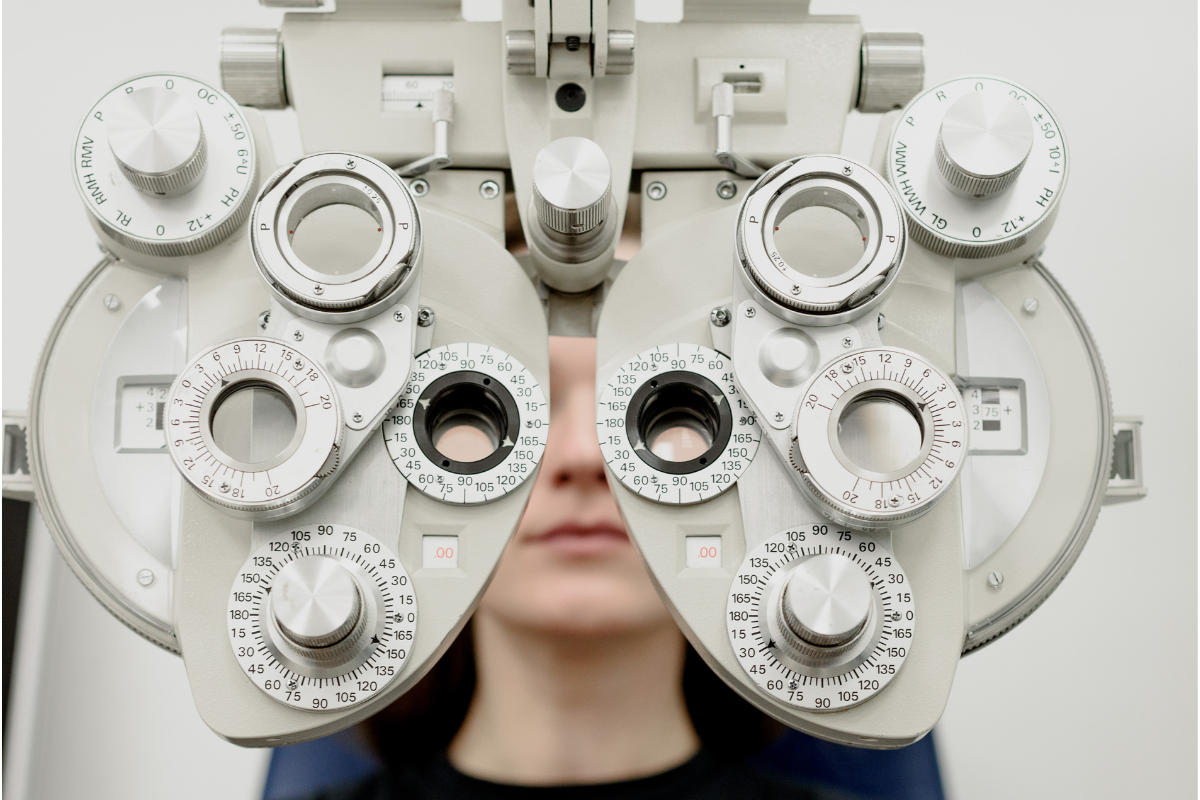
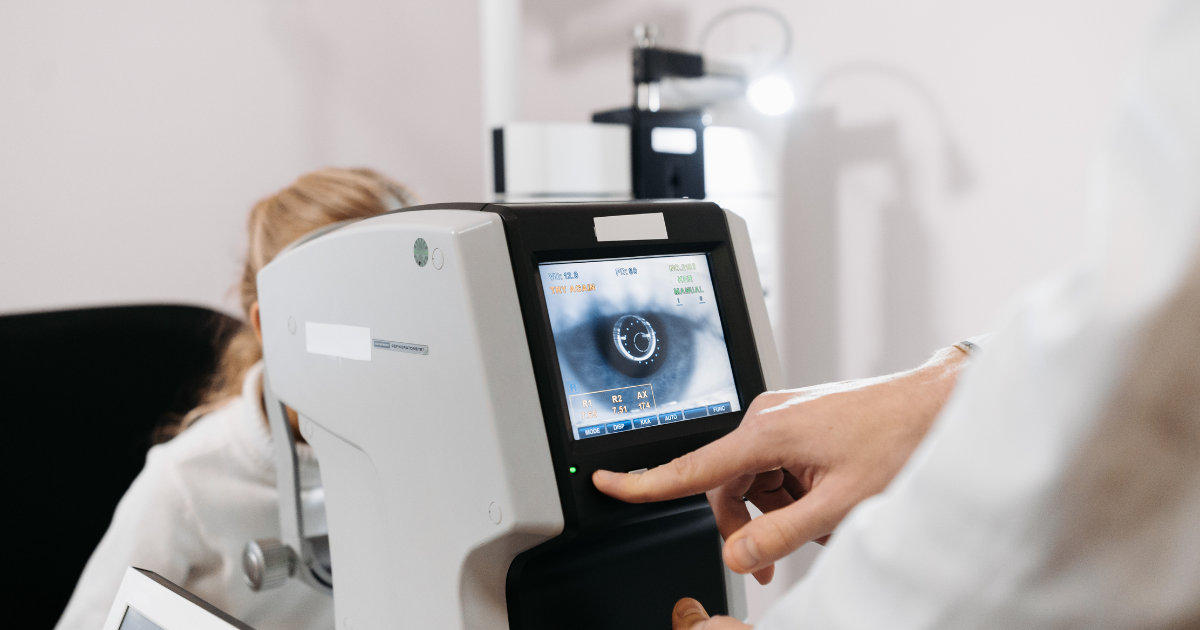
A child does not always need to read letters or answer complex questions for an optometrist to collect useful information. Modern instruments can estimate refractive error, observe how light moves through the eyes, and help identify possible differences between them.
For younger children, charts may use familiar shapes or symbols instead of letters. Other tests can evaluate whether the child follows a target, responds to visual patterns, or uses both eyes together. The optometrist can adapt the examination according to the child’s age, communication skills, and comfort level.
The American Academy of Pediatrics explains that instrument-based screening may use photoscreeners or autorefractors. These devices use light and cameras to estimate certain visual characteristics without requiring a child to identify letters.
Automated readings can provide valuable information, but they are not a complete diagnosis. Children’s focusing systems are active and can sometimes influence measurements. An optometrist must interpret the results alongside visual behavior, eye alignment, health findings, and other tests.
Technology is most useful when it supports clinical judgment. A device may identify a possible refractive error, but the doctor determines whether the finding is significant, whether additional testing is necessary, and how it may affect the child’s vision.
Vision screenings are valuable because they can identify children who may need further evaluation. Schools, pediatric offices, and community programs may use eye charts or automated equipment to check for selected risk factors.
However, a screening is designed to be brief. It does not provide the same level of evaluation as a comprehensive pediatric eye exam. The American Association for Pediatric Ophthalmology and Strabismus publishes age-based screening recommendations and advises referral when a child does not meet the expected screening criteria.
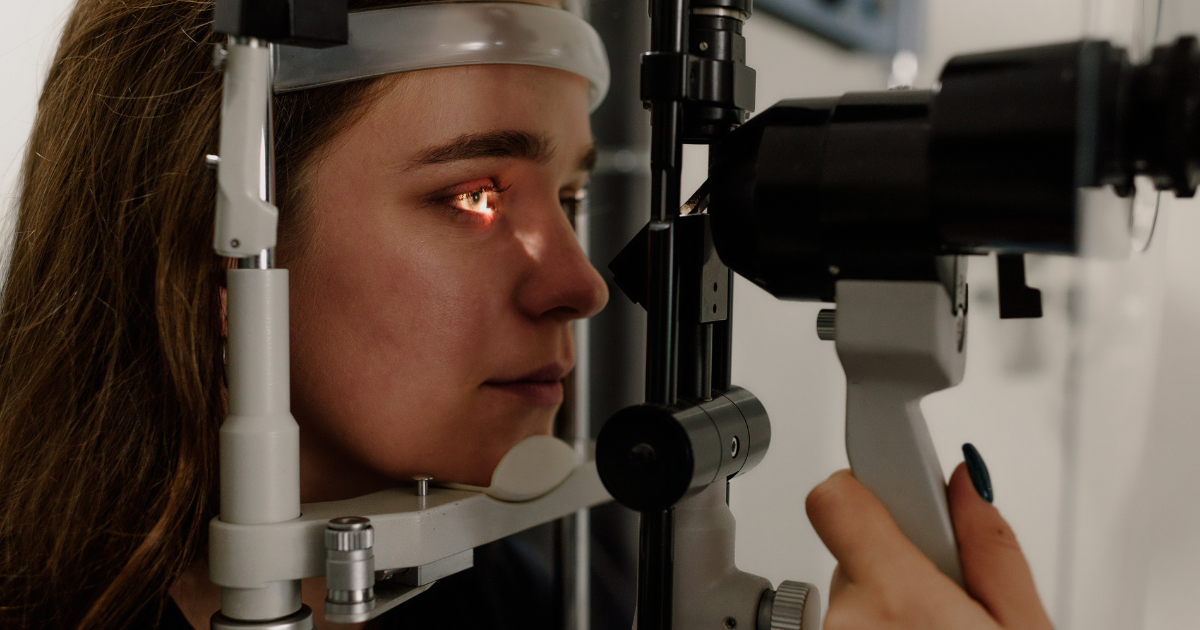
A comprehensive examination may assess:
A child who passes a screening may still develop symptoms later. Likewise, a child who does not pass should receive the recommended follow-up rather than waiting to see whether the issue resolves on its own.
A refractive error occurs when the shape of the eye prevents light from focusing correctly on the retina. The National Eye Institute identifies nearsightedness, farsightedness, and astigmatism among the common types that can affect children.
Nearsighted children may see books clearly but struggle with distant classroom displays. Farsightedness can make close work more demanding, although children may compensate by using their focusing ability. Astigmatism can create blurred or distorted vision at different distances.
Because children often adapt to gradual changes, a refractive error may not lead to an obvious complaint. Objective measurements and age-appropriate visual testing can help identify whether corrective lenses should be considered.
Clear vision depends on more than the focusing power of each eye. The eyes must also align and send useful information to the brain. When one eye provides a consistently weaker or misaligned image during early development, the brain may begin favoring the other eye.
This can contribute to amblyopia, often called lazy eye. The American Association for Pediatric Ophthalmology and Strabismus explains that amblyopia is reduced vision caused by abnormal visual development. It may be associated with unequal prescriptions, eye misalignment, or another condition that interferes with clear vision.
Amblyopia may not be easy for a parent to recognize, particularly when the stronger eye allows the child to function normally. Early evaluation matters because the visual system continues developing during childhood. Treatment recommendations depend on the cause and may include glasses, patching, medication, or referral for specialized care.
Vision should be monitored throughout childhood rather than checked only when a child reports blur. The appropriate schedule can depend on age, symptoms, family history, previous findings, and recommendations from the child’s health-care providers.
The U.S. Preventive Services Task Force recommends vision screening at least once for children between ages three and five to detect amblyopia or its risk factors. Pediatric and eye-care organizations also provide guidance for evaluating vision at other stages of development.
An earlier appointment may be appropriate when parents notice unusual visual behavior or when a child has:
Urgent symptoms, eye injuries, sudden vision changes, or significant pain should be addressed promptly rather than postponed until the next routine examination.
A calm explanation can help a child approach the appointment with confidence. Parents can describe the visit as a chance to play visual games, look at lights and pictures, and learn how the eyes work. Avoid suggesting that there will be right or wrong answers.
Parents should bring relevant information, including:
Scheduling the visit at a time when the child is normally rested can also improve cooperation. Young children may not complete every test in the same way as an adult, but an optometrist experienced in pediatric care can adjust the pace and testing method.
A child-friendly examination should create enough time for the child to become familiar with the room, instruments, and doctor. Explaining each step in simple language can reduce uncertainty and make the results more reliable.
Redefined Eyecare provides children’s eye exams in McKinney using a comfortable, personalized approach. Its pediatric service evaluates visual acuity, eye alignment, eye movement, and common childhood eye conditions. Based on the findings, the practice may recommend glasses, discuss other care options, or provide a referral when specialized evaluation is needed.
The practice also advises parents to pay attention to behaviors such as frequent headaches, squinting, sitting very close to screens, covering one eye, and struggling with reading. Sharing these observations gives the optometrist additional context for interpreting the examination.
Modern instruments have expanded the ways eye-care professionals can evaluate children, including those who cannot yet read or provide detailed answers. Still, no single device can represent everything a child experiences at home or in the classroom.
The most effective approach combines objective measurements, age-appropriate testing, professional interpretation, and observations from the adults who know the child best. Parents and teachers can continue monitoring visual behavior after the appointment and report new concerns when they arise.
Pediatric eye exams are not simply smaller versions of adult appointments. They are designed around a developing visual system and a child’s ability to communicate. When technology is paired with patience and careful clinical evaluation, families can receive clearer information and a practical plan for supporting healthy vision as the child grows.