Why a Comprehensive Eye Exam Is an Information System, Not Just a Vision Check
Well-designed comprehensive eye examinations turn a collection of symptoms, health history, visual measurements, and eye-health findings into decisions that can improve sight and identify problems requiring closer attention.
That process is easy to underestimate. Reading an eye chart is visible and familiar, so it often becomes shorthand for the entire exam. Yet visual acuity answers only one question: how clearly a person can resolve detail under specific testing conditions. It does not fully explain eye coordination, focusing demands, pressure, retinal health, or whether a prescription works comfortably throughout a normal day.
A useful comparison is a well-designed business information system. Good decisions depend on accurate inputs, appropriate measurements, meaningful comparisons, and a professional who can interpret the result. More data is not automatically better. The value comes from collecting the right information for the person in the chair.
The Exam Begins Before Any Instrument Is Used
Patient history is not administrative filler. It determines which questions the examination needs to answer. A subtle change in night driving may matter differently for a person with a stable prescription than for someone who recently began a new medication or has a family history of glaucoma.
Useful inputs include:
- When a vision change began and whether it was sudden or gradual
- Whether one or both eyes are affected
- Current glasses, contact lenses, and previous prescriptions
- Medications, supplements, allergies, and diagnosed health conditions
- Previous eye injuries, infections, surgeries, or treatments
- Family histories of glaucoma, macular degeneration, or serious vision loss
- Daily visual demands such as driving, screen work, reading, or detailed manual tasks
Specific descriptions are more useful than saying vision feels “off.” Patients can note whether text doubles, headlights create glare, near work causes fatigue, or focus takes time to shift between a monitor and objects across the room.
Different Tests Answer Different Questions
A comprehensive examination is not a fixed bundle in which every person receives every available test. The clinician selects and interprets procedures according to age, symptoms, medical history, risk, and earlier findings.
Visual acuity and refraction evaluate clarity
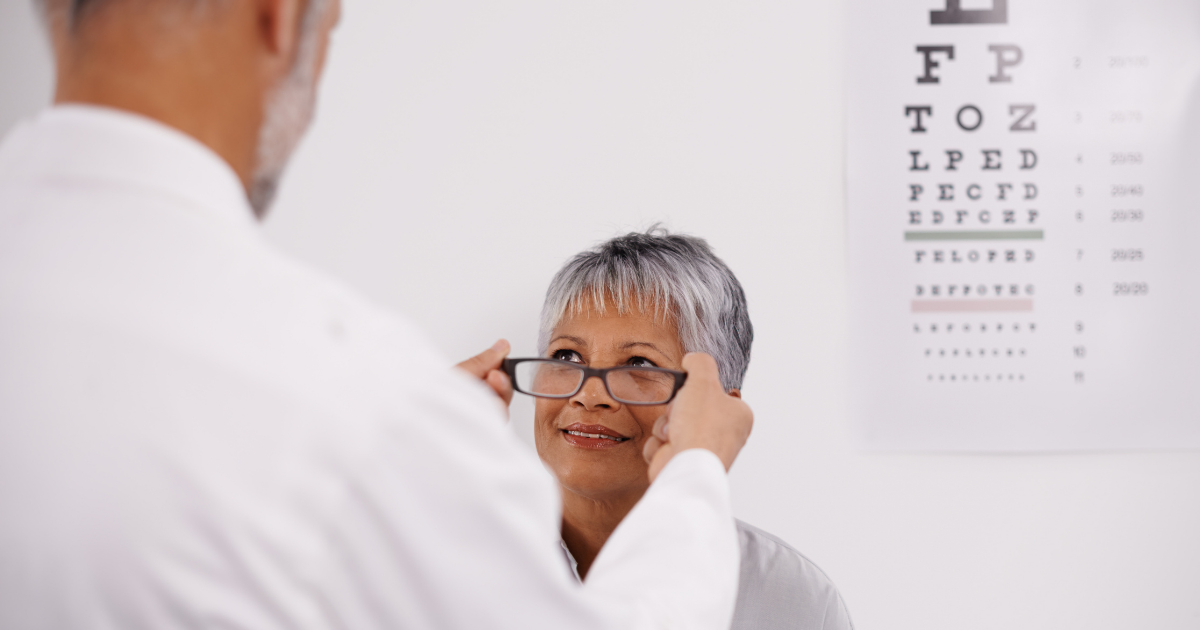
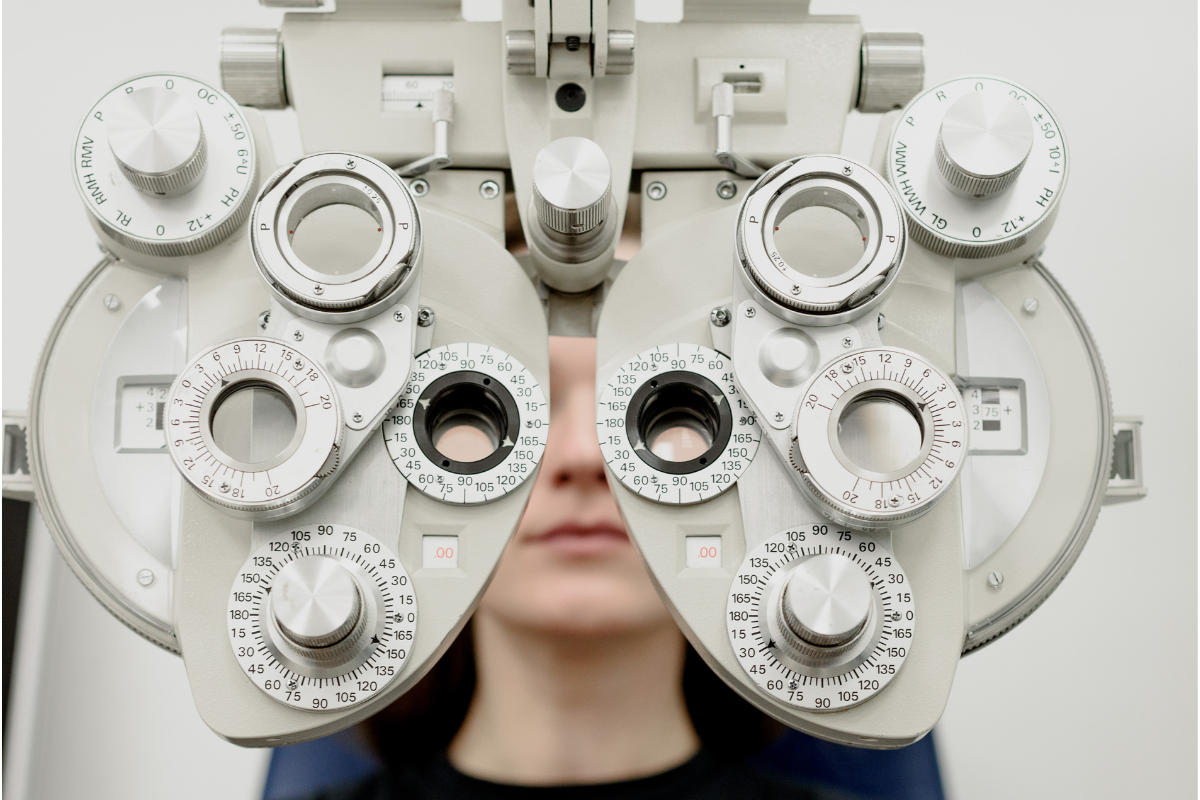
Visual acuity measures how clearly each eye sees at selected distances. Refraction then evaluates how lenses change focus. The National Eye Institute’s overview of refractive errors explains that myopia, hyperopia, astigmatism, and presbyopia occur when light does not focus correctly on the retina.
A prescription is therefore a measured optical solution, but the final recommendation may also account for working distance, adaptation, occupation, and how the two eyes function together.
Coordination tests assess performance as a pair
Eye movements, alignment, focusing, and pupil responses provide information that an eye chart cannot. Someone may identify small letters yet still experience strain, intermittent double vision, or difficulty sustaining near work. These findings help separate a simple clarity problem from one involving how the visual system performs.
Health evaluation looks beyond the prescription
Examination of the eye’s external and internal structures can reveal findings unrelated to a change in lens power. Pressure measurement may contribute to glaucoma assessment, while magnified examination helps evaluate the cornea, lens, retina, and optic nerve.
The National Eye Institute explains that dilation widens the pupil and gives the doctor a broader view inside the eye. Its current guidance lists visual acuity, peripheral vision, eye-muscle function, pupil response, pressure measurement, and dilation among the possible parts of a dilated examination.
A Baseline Makes Future Data More Valuable
A single normal-looking result is useful, but a sequence of comparable results can reveal whether something is changing. This is the difference between a snapshot and a trend.
Suppose a pressure reading, optic-nerve appearance, prescription, or retinal finding falls within an expected range. At a later exam, the clinician can compare the new information with that baseline. A modest difference may reflect normal variation, testing conditions, or genuine change. Context determines what it means.
This longitudinal view supports several decisions:
- Continue routine observation when findings remain stable and risk is low.
- Repeat a measurement when reliability or consistency is uncertain.
- Add targeted testing when an initial finding raises a specific question.
- Begin or modify care when evidence supports intervention.
- Refer to another provider when specialized evaluation or treatment is appropriate.
Technology can improve documentation and comparison, but it does not interpret itself. Image quality, anatomy, symptoms, risk factors, and the rest of the clinical examination still matter.
Risk Changes the Examination Strategy
Exam timing and test selection should reflect individual risk rather than a universal schedule. The Centers for Disease Control and Prevention notes that some eye diseases may be present before symptoms become obvious and identifies comprehensive dilated exams as an important part of preventing vision loss.
Diabetes is a clear example of risk-based care. The CDC’s clinical guidance on diabetes and eye health states that people with diabetes face higher risks of retinopathy, glaucoma, cataracts, and vision loss. Health history therefore changes both the importance and possible frequency of retinal evaluation.
Other factors that may influence a plan include age, high blood pressure, steroid use, previous injury, contact lens wear, family history, and earlier abnormal findings. Patients should follow the interval recommended for their circumstances and seek care sooner when new symptoms develop.
The Output Should Be an Actionable Plan
An exam creates value when its findings are translated into understandable next steps. The result may be a new prescription, reassurance that measurements are stable, advice about visual ergonomics, monitoring of a finding, or a referral.
Patients can ask three simple questions:
- What did today’s testing show?
- How does it compare with my earlier results?
- What should I do next, and which symptoms should prompt an earlier call?
The written prescription is also a portable output. Under the Federal Trade Commission’s Eyeglass Rule, prescribers must provide a copy of an eyeglass prescription after a refractive exam without an additional fee. This supports consumer choice while leaving room for professional help with measurements, lens selection, fitting, and adjustment.
Contact lenses require additional fitting information. The U.S. Food and Drug Administration explains that a contact lens prescription may include the material or manufacturer, base curve, diameter, power, and expiration date. That is why a glasses prescription and a contact lens prescription are not interchangeable.
Daily Context Belongs in the Clinical Conversation
Modern visual demands are highly specific. A desktop monitor, warehouse scanner, highway commute, musical score, and precision tool may all require clear vision at different distances. Bringing estimated working distances and task descriptions helps connect clinical measurements with real use.
Occupational risks matter too. The National Institute for Occupational Safety and Health recommends matching protective eyewear to the hazard while considering coverage, comfort, peripheral vision, and other equipment. Regular prescription glasses are not automatically suitable protection against impact, particles, or chemicals.
Patients should mention workplace exposure, sports, home projects, and hobbies. The recommendation may involve safety eyewear, task-specific lenses, or instructions for responding to exposure rather than a routine prescription alone.
How Mogadore Eye Care Describes Its Exam Process
Mogadore Eye Care states that Dr. Shannon Honeycutt updates glasses or contact lens prescriptions during comprehensive exams and uses current technology to evaluate eye health. The practice identifies dry eye, cataracts, and glaucoma among the common conditions for which it screens.
This published scope reflects the dual purpose of a full examination: improve present-day visual performance while looking for findings that may not yet produce obvious symptoms. It also shows why the exam should not be reduced to a transaction for stronger lenses.
Prepare for a Higher-Value Eye Exam
A few practical steps can improve the quality of the information available:
- Bring every pair of glasses used regularly, including readers and safety eyewear.
- Record all medications and relevant health diagnoses.
- Write down recent symptoms, their timing, and the activities that trigger them.
- Ask relatives about diagnosed eye diseases rather than general “poor eyesight.”
- Bring sunglasses and plan for temporary light sensitivity if dilation is expected.
- Report urgent changes such as sudden vision loss, flashes, a rapid increase in floaters, severe pain, or chemical exposure immediately.
A comprehensive exam works best as a decision system with four connected parts: accurate patient input, clinically appropriate testing, comparison with prior information, and a clear action plan. That structure gives technology a meaningful role without allowing equipment to replace judgment. More importantly, it helps patients understand not only how well they can read an eye chart today, but what they can do to protect useful vision over time.