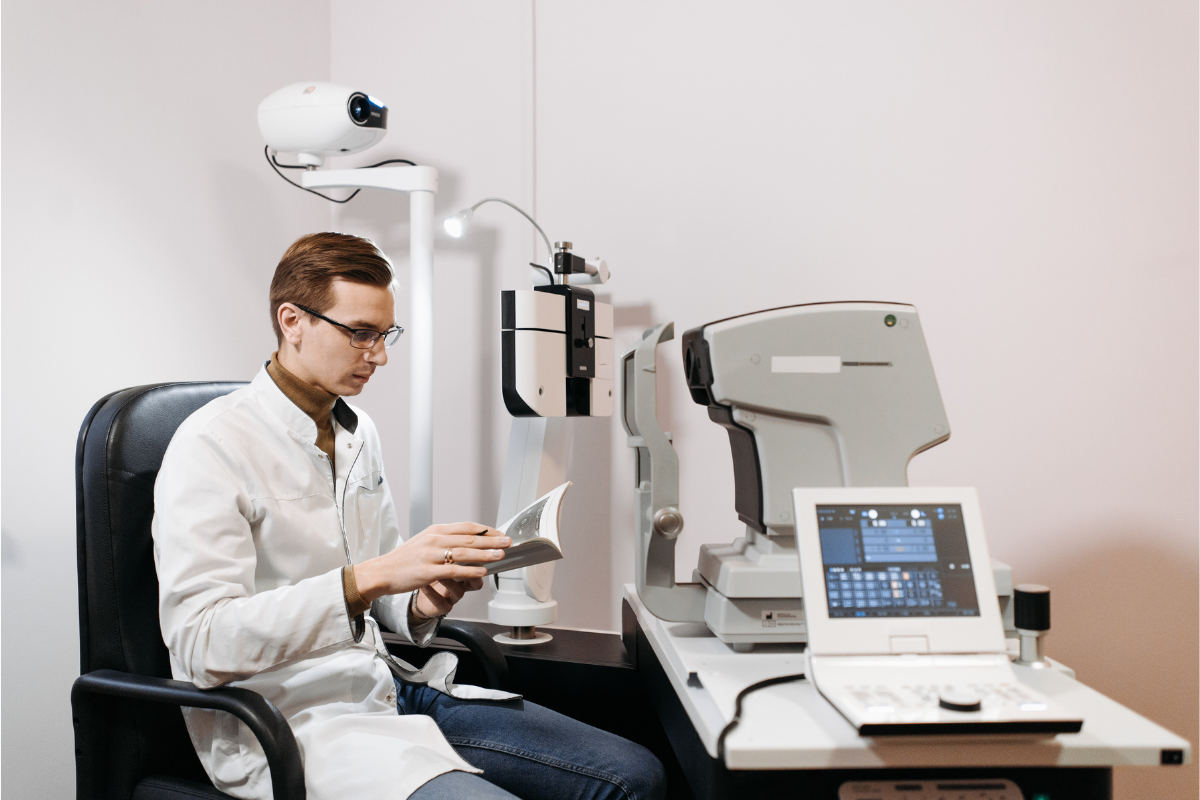
What Makes Eye Care Technology Worth Trusting
A modern Optometrist can use digital tools to capture more information about the eyes, but the real value comes from turning that data into understandable and responsible care.
Eye-care technology now extends well beyond the familiar letter chart. Digital imaging, automated measurements, electronic records, virtual frame previews, online scheduling, and software-assisted analysis can all influence the patient experience.
More technology does not automatically mean better care. A device must answer a relevant clinical question, produce reliable information, protect patient privacy, and support rather than replace professional judgment. Patients do not need to understand every technical specification, but they should know how to evaluate whether a practice uses technology thoughtfully.
Equipment Is Useful Only When It Answers a Clinical Question
Diagnostic devices can measure eye pressure, map the cornea, photograph the retina, evaluate peripheral vision, or document structures associated with the tear film. Each test provides a different type of information. No single image or measurement represents a complete eye examination.
The first question should therefore be simple: Why is this test being performed? A useful answer connects the technology to the patient’s symptoms, health history, risk factors, or need for future comparison.
Technology should also complement established examination methods. The National Eye Institute explains that dilation helps doctors examine internal eye structures and check for conditions that may not produce early warning signs. A clear photograph can be informative, but patients should not assume that every imaging service automatically replaces dilation or another doctor-recommended test.
A responsible technology conversation should explain:
- What part of the eye is being evaluated
- Why the test is relevant to the individual
- Whether it is screening, diagnostic, or monitoring technology
- What the result does and does not reveal
- Whether another examination method is still needed
- How the result may influence the care plan
Longitudinal Data Can Be More Valuable Than a Single Scan
One of the strongest advantages of digital eye care is the ability to compare information over time. A measurement taken today may fall within an expected range, yet its relationship to previous measurements can reveal a meaningful trend.
This is especially useful when monitoring eye pressure, visual fields, retinal appearance, corneal shape, prescription changes, or chronic symptoms. Consistent records can help the doctor distinguish a stable characteristic from a developing concern.
Data quality matters, however. Useful comparisons depend on correct patient identification, accurate dates, appropriate testing conditions, and consistent interpretation. A sophisticated device cannot compensate for information stored under the wrong record or a scan that contains significant artifacts.
Patients can support continuity by requesting copies of important findings and keeping their contact information current. The federal patient-access guidance from HealthIT.gov explains that people can use their records to understand care plans, monitor health conditions, identify errors, and share information with other providers.
Artificial Intelligence Should Support Human Judgment
Artificial intelligence is increasingly discussed in connection with medical imaging and pattern recognition. In eye care, software may help identify features that deserve closer review, organize large quantities of data, or support a clinician’s workflow.
The distinction between assistance and authority is important. Software generates an output according to its intended use, training, input quality, and technical limitations. The doctor must still decide whether the result fits the patient’s symptoms, examination findings, and broader health history.
The U.S. Food and Drug Administration maintains information about authorized AI-enabled medical devices and links to public summaries of their reviewed uses. Inclusion on such a list does not mean that every AI tool is appropriate for every patient or clinical situation.
When software contributes to care, reasonable questions include:
- What is the system designed to evaluate?
- Does the doctor independently review the underlying information?
- What happens if the scan quality is poor?
- Can the result be explained in ordinary language?
- Will a concerning output lead to confirmation through another method?
Cybersecurity Belongs in the Patient-Safety Conversation
Eye-care records can contain contact information, health histories, prescriptions, diagnostic images, payment information, and details about other medical conditions. Protecting those records is not merely an information-technology task.
The U.S. Department of Health and Human Services provides Security Rule guidance covering administrative, physical, and technical safeguards for electronic protected health information. Its resources emphasize risk analysis and ongoing risk management rather than relying on a single security product.
Patients will not be able to inspect a practice’s entire security program, but they can notice basic signs of responsible digital operations. Staff members should verify identity before disclosing records, sensitive information should not be left visible on unattended screens, and the practice should provide a clear process for requesting or correcting information.
Patients also have a role. Use unique passwords for healthcare accounts, avoid sharing portal credentials, and activate stronger login protection when available. The Cybersecurity and Infrastructure Security Agency recommends multifactor authentication because it adds protection when a password is compromised.
The Digital Front Door Must Remain Accessible
Online scheduling, electronic forms, text reminders, frame previews, and contact lens reordering can reduce administrative friction. These features are helpful only when people can actually use them.
A patient may rely on keyboard navigation, screen magnification, a screen reader, high contrast, or assistance from a caregiver. Small text, unlabeled form fields, unclear error messages, and color-only instructions can create unnecessary barriers, particularly for a business serving people with visual concerns.
The World Wide Web Consortium’s Web Accessibility Initiative provides standards and resources for making digital experiences more accessible. Healthcare businesses should treat accessibility as part of functional design, not as a decorative website upgrade.
A good digital workflow also retains a human alternative. Patients should have a practical way to call the office, clarify a form, request communication assistance, or explain a need that does not fit a standard online menu.
Screen-Based Work Requires Better Questions
Digital devices have changed the information an eye doctor needs to collect. A statement such as “I use a computer all day” is only a starting point. Screen size, viewing distance, lighting, posture, task duration, prescription needs, contact lens wear, blinking habits, and air movement may all influence comfort.
The American Optometric Association’s overview of computer vision syndrome discusses symptoms including eyestrain, headaches, blurred vision, and dry eyes. These symptoms can have multiple contributing factors, so a fashionable lens feature should not replace a thorough evaluation.
Before an examination, patients can collect useful information by noting:
- Which device or task produces symptoms
- How long it takes before discomfort begins
- Whether symptoms affect one eye or both
- The approximate distance from the eyes to the screen
- Whether blinking, breaks, artificial tears, or different glasses help
- Whether symptoms continue after screen use ends
This small dataset often gives the doctor more actionable information than a general estimate of daily screen time.
Eye Data Can Connect With Broader Healthcare
The eyes can be affected by diabetes, high blood pressure, autoimmune disease, medication use, and other systemic factors. Technology becomes more valuable when findings can be placed within that wider medical context.
The Centers for Disease Control and Prevention highlights the role of eye-care specialists in detecting diabetes-related eye disease and encourages comprehensive examinations that include dilation. When a relevant finding is identified, secure communication with a primary-care clinician or specialist may support more coordinated care.
Patients should bring an accurate medication list and share major health changes. They can also ask whether a report should be sent to another provider and confirm where that information will go.
A Patient-Centered Technology Model in Hartland
Theia Vision Care is a family-owned boutique practice in Hartland, Wisconsin. Its published services include comprehensive, pediatric, contact lens, diabetic, and medical eye examinations, along with dry-eye care and management of several common eye conditions.
The practice’s digital front door includes online scheduling, virtual frame try-on, and online contact lens reordering. At the same time, its comprehensive examination model reserves up to 60 minutes with the doctor. This balance illustrates a useful principle: technology can simplify administrative tasks while preserving time for interpretation, questions, and individualized recommendations.
Theia also publishes information about its direct-care pricing and annual concierge option. Clear information about services and payment models helps patients understand the workflow before arriving, which is another practical form of system design.
Questions for Evaluating a Technology-Enabled Practice
- Why is each test recommended? The explanation should connect the technology to a clinical purpose.
- Will the doctor review the results with me? Data should become understandable information.
- Can previous results be compared? Long-term trends may matter more than an isolated measurement.
- Does imaging replace dilation? Ask how the different examination methods fit together.
- How can I obtain my records? Learn how results can be downloaded, corrected, or shared.
- What protects my online account? Use strong passwords and multifactor authentication when offered.
- Is assistance available for digital forms? A usable system should accommodate different abilities and communication needs.
- What happens when technology and symptoms disagree? Clinical judgment and appropriate follow-up should guide the next step.
The Best Technology Makes Care More Understandable
The strongest eye-care technology is not necessarily the newest machine in the building. It is the system that helps the doctor detect relevant changes, preserve accurate records, explain findings, protect private information, and coordinate appropriate care.
Patients should leave with more than images or measurements. They should understand what was examined, what the findings mean, which limitations remain, and what action to take next. When technology supports that outcome, it becomes more than an impressive feature. It becomes part of a trustworthy clinical relationship.